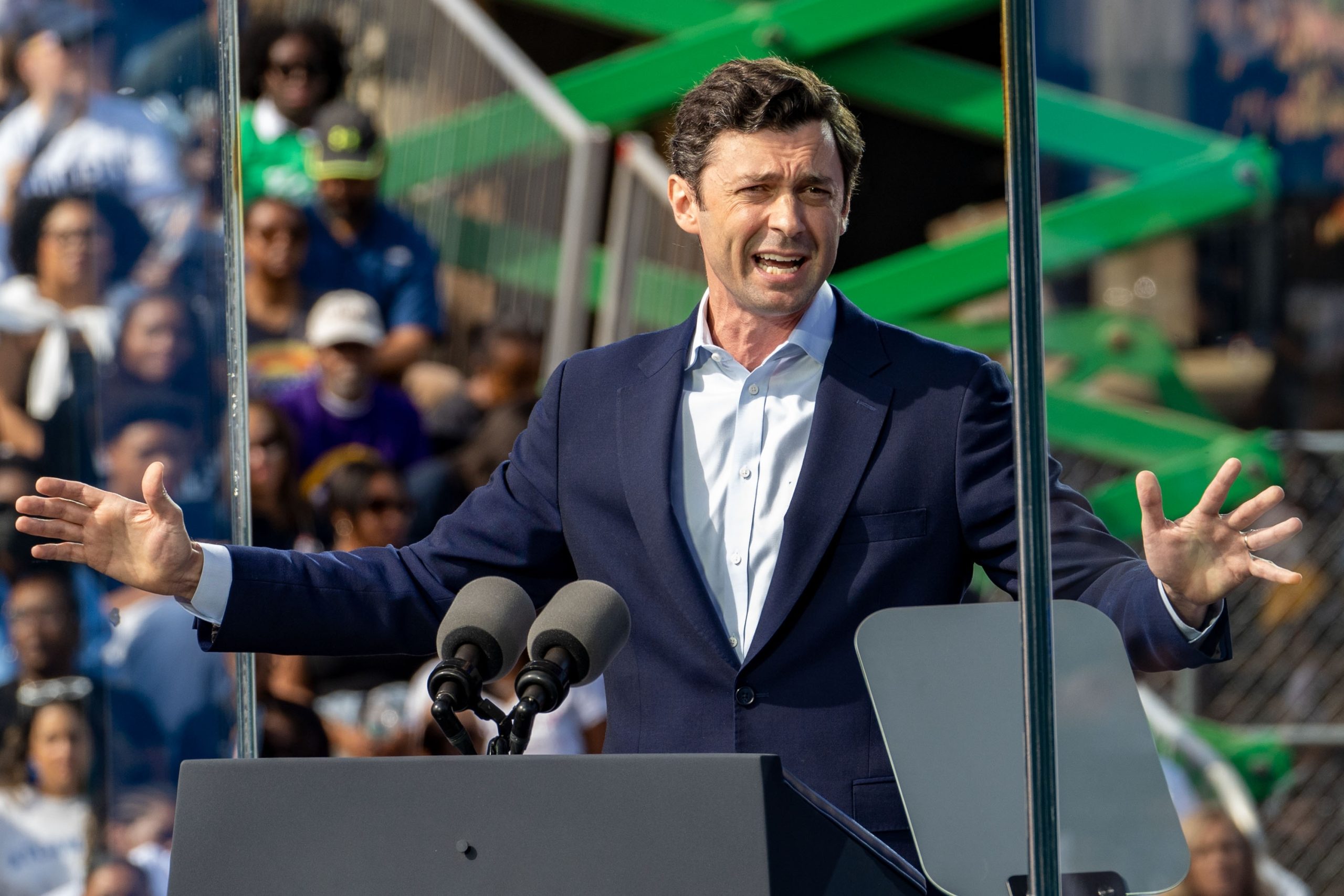
Senator Jon Ossoff, a Georgia Democrat, utilized a recent public assembly to acknowledge former Representative Marjorie Taylor Greene’s recent critiques of the “Make America Great Again” (MAGA) movement.
Highlighting Greene’s assertions regarding the disillusionment of core constituents, Ossoff remarked, “Welcome to the resistance,” identifying a documented ideological divide within the state’s Republican base.
Defensive Campaigns and Shifting Allegiances
\Ossoff enters the 2026 electoral cycle as the solitary Democratic senator seeking retention in a state carried by Donald Trump in the 2024 executive contest. This makes Georgia a primary theater for legislative control, where the opposition aims to expand a marginal Senate majority. Ossoff has launched his bid by publicizing a $25 million campaign fund while emphasizing collaborative work on regional priorities, such as agricultural subsidies and military infrastructure.
\The most current Federal Election Commission (FEC) filings as of late January 2026, there is a considerable financial gap between the incumbent and the Republican primary field.
| Candidate | Party | Total Raised | Total Spent | Cash on Hand |
| Jon Ossoff | Democratic | $63,937,894 | $42,718,888 | $25,550,739 |
| Buddy Carter | Republican | $6,243,858 | $5,070,230 | $4,192,558 |
| Mike Collins | Republican | $3,280,001 | $1,544,393 | $2,332,803 |
| Derek Dooley | Republican | $3,008,414 | $869,433 | $2,138,981 |
Simultaneously, the political landscape has shifted following Marjorie Taylor Greene’s formal resignation from the House of Representatives on January 5, 2026. Her exit followed an acrimonious split with the President over the non-disclosure of federal archives, specifically the “Epstein files” and disagreements regarding foreign assistance. Her departure has reduced the Republican plurality in the lower chamber to a five-seat margin, complicating the passage of executive-aligned legislation.
The Unsettled Republican Field
Greene’s exit significantly altered the strategic calculus for the 2026 Senate race. Previously discussed as a potential contender, her decision to vacate her seat followed the withdrawal of Governor Brian Kemp from the race. Kemp’s refusal to seek the seat removed a top-tier challenger, leaving the Republican field—currently featuring Representatives Buddy Carter and Mike Collins—fluid and unsettled.
Ossoff has leveraged this internal discord by aligning his rhetoric with Greene’s recent public statements. In January 2026, Greene alleged that the administration primarily serves “big donors” and “foreign countries” rather than its base. Ossoff echoed these sentiments at his “Rally for Our Republic,” characterizing the current administration as compromised and emphasizing that even former staunch allies are now questioning its transparency.
Preserving Institutional Accountability
The fragmentation within the dominant state party and the departure of a high-profile populist figure represents a return to institutional accountability. The rejection of specific executive policies by a former ally underscores the vital role of internal dissent in a healthy republic. For Democrats, this transition provides a factual basis to argue that governance should prioritize transparency and constituent needs over donor influence. By focusing on bipartisan legislative successes and the protection of civil liberties, the current path forward emphasizes that a stable democracy relies on leaders who are accountable to the electorate rather than a singular executive authority.