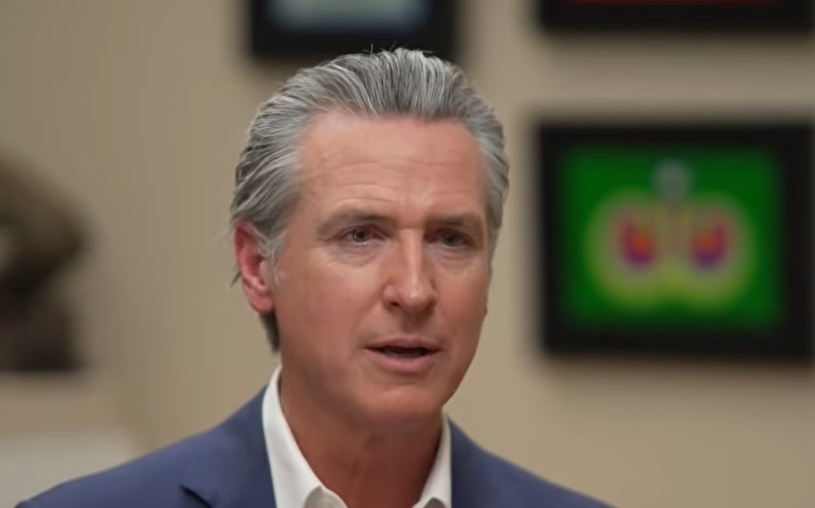
California Governor Gavin Newsom remarked on the ongoing affordability crisis that is hammering the wallets of everyday Americans across the country. During an interview Sunday on CNN with Dana Bash, Newsom discussed some initiatives and results of his state’s efforts to address affordability.
Bash began the exchange by noting that California’s prices run roughly 11 percent above the national average and relayed a story about meeting former Californians who left the state because they could not afford rent, homeownership, or starting a family.
Newsom countered by emphasizing growth and scale. He argued that California has seen renewed population gains in recent years and has climbed to become the fourth-largest economy in the world. The state, he said, leads in emerging industries such as artificial intelligence, quantum technology, robotics, agriculture, forestry, and manufacturing—a breadth of dominance he framed as evidence of long-term vitality rather than decline.
Newsom Discusses Healthcare, Minimum Wage, And Housing
Newsom continued with a list of policy initiatives aimed at easing financial strain. Accordig to the governor, California now offers $11 insulin through a state-led program, boasts what he described as the nation’s lowest uninsured rate at 6.4 percent, and has expanded subsidized childcare by more than 300,000 slots—more than any other state. He also pointed to higher wage floors, including a $25 minimum wage for health care workers and $20 for fast-food workers, along with expanded paid sick leave and eight weeks of paid family leave.
Higher education affordability, he added, remains a bright spot, with roughly 65 percent of University of California (UC) and California State University (CSU) graduates leaving without student debt.
Still, Newsom acknowledged a deeper structural problem: housing. He described the state’s decades-long failure to build enough homes as self-inflicted and central to the broader affordability crisis. California, he said, has “been unable to get out of its own way” for roughly 70 years.
That, he argued, is beginning to change. The governor pointed to what he called historic housing reforms enacted in recent years—measures he said even some of his “worst” critics, including liberal journalist Ezra Klein, have recognized as among the “most progressive and perhaps most impactful reforms in a generation.”