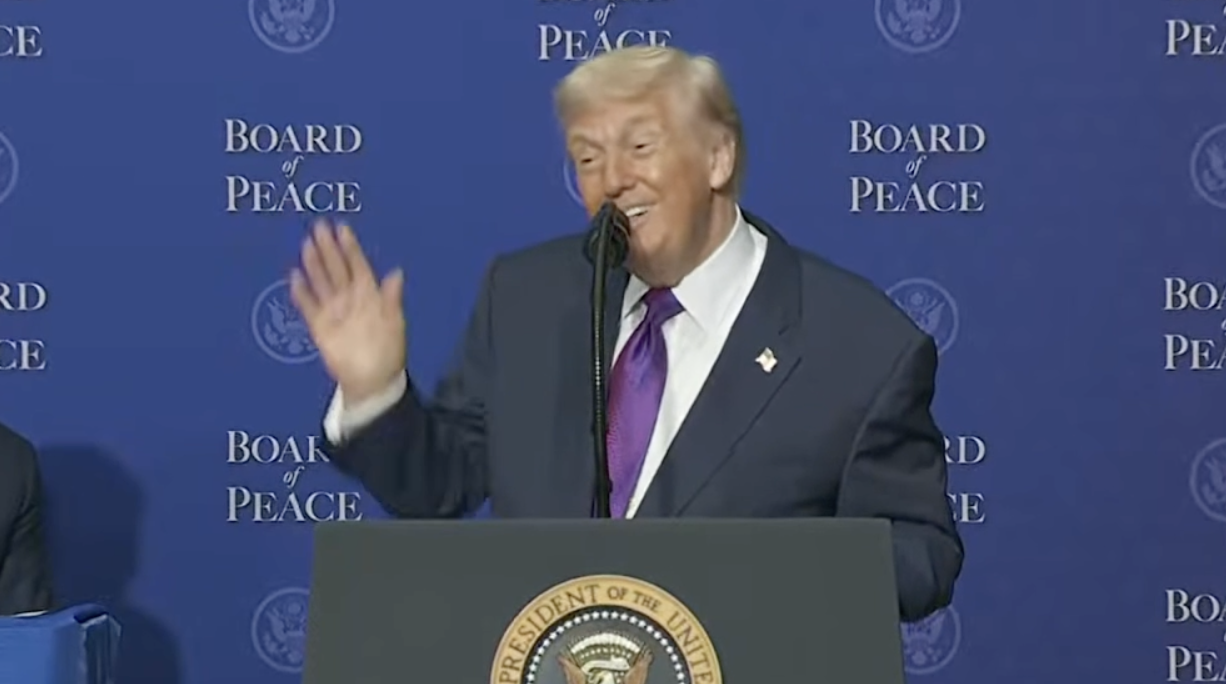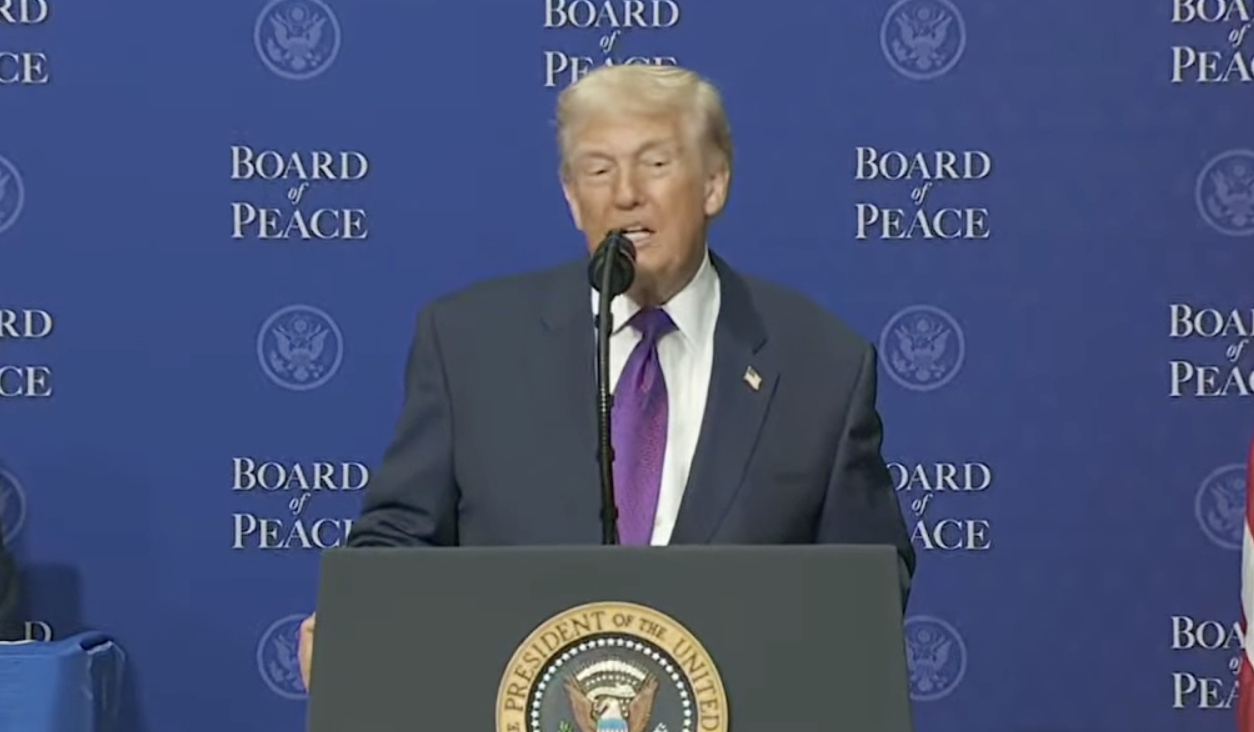
President Donald Trump announced Thursday that the United States would commit $10 billion to the Board of Peace—an international pet project he currently serves as “chairman for life”—but offered no details about where the money will come from or how it will be authorized.
Speaking at the United States Institute of Peace in Washington D.C., Trump framed the pledge as a bargain. “It sounds like a lot, but it’s a very small number,” he said, comparing the sum to “two weeks of fighting” in a modern war. He thanked supporters for backing the figure and declared the United States “committed to $10 billion.”
What he did not explain is whether that money has been appropriated by Congress, redirected from an existing account, or simply proposed. The White House has yet to clarify the funding source, and no legislative package outlining the commitment has been publicly released. Under the Constitution—which has often been sidelined by the current administration—Congress controls federal spending, making any unilateral financial commitment of that magnitude legally and procedurally dubious.
Trump Says $10 Billion Is A ‘Very Small Number’
The optics are also hard to ignore. Trump described $10 billion as a “very small number” at a time when millions of Americans are struggling with rising healthcare costs, housing affordability, and high cost of living. For many American families, $10 billion is not abstract math—it’s an amount that could fund SNAP, expand Medicaid coverage, shore up Social Security, or lower healthcare premiums.
Beyond the budgetary ambiguity, the tone struck many as detached from domestic reality. Calling $10 billion a “small number” may serve as rhetorical shorthand in geopolitical terms, but it lands differently with the millions of Americans who are suffering from the ongoing affordability crisis that the president promised to address on day one.