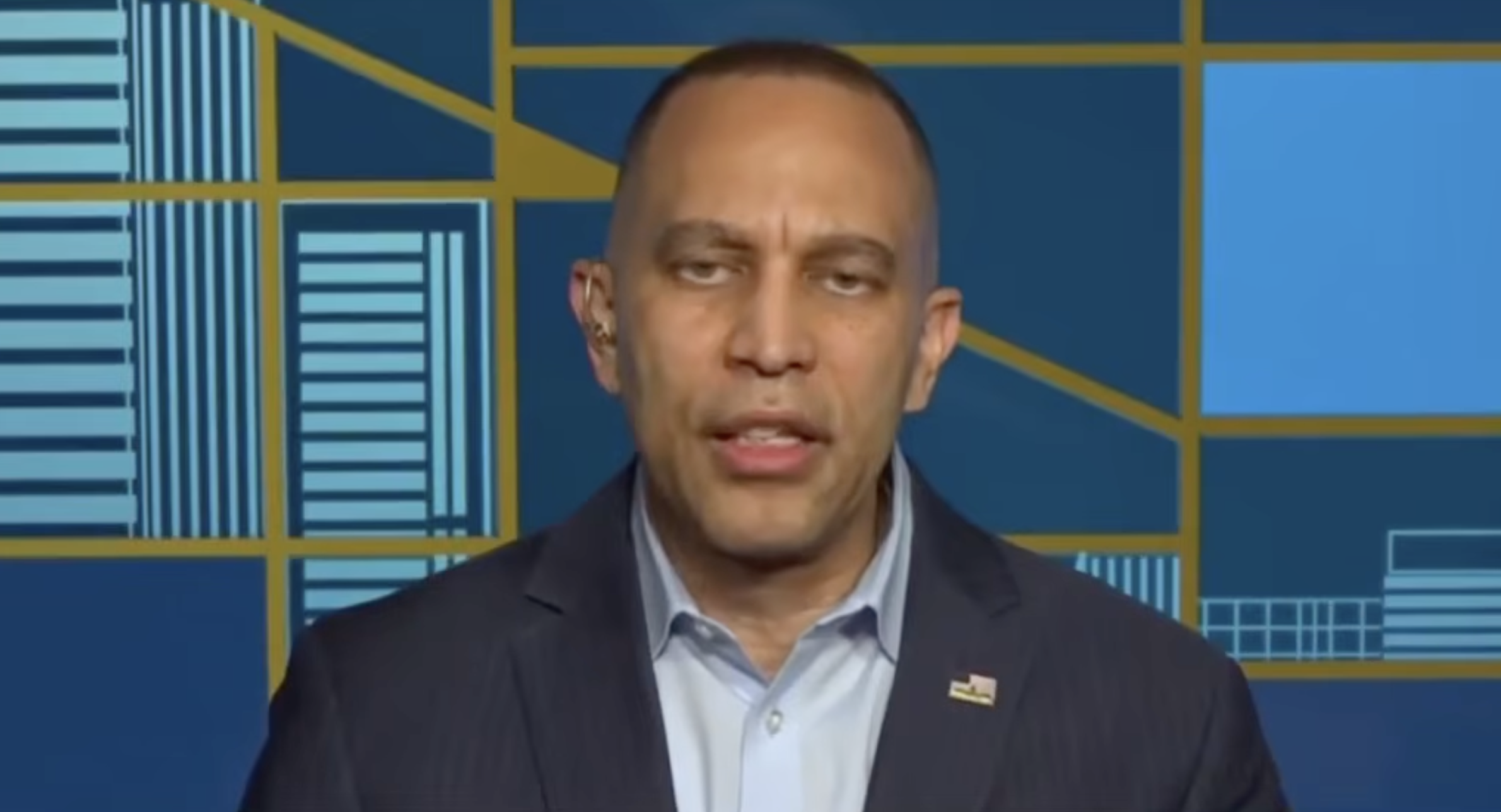
During a recent interview on MS NOW with host Jen Psaki, House Minority Leader Hakeem Jeffries (D-NY) responded to a personal insult from President Donald Trump before pivoting to what he described as the real stakes facing the country: the economy and the integrity of upcoming elections.
Psaki opened the interview by asking Jeffries to respond to Trump calling him a “low IQ individual” during a recent speech. Jeffries dismissed the jab as tired and unoriginal. “I mean, he’s such an unhinged, unpresidential, un-American individual, but I was actually quite surprised that he wasn’t able to come up with something more original. Like, this is his go-to insult. I finally earned a presidential nickname, and this is what he goes with,” Jeffries mocked.
Jeffries suggested the insult reflects a president who has no idea what he’s doing and that it’s the American people who are suffering the consequences of Trump’s policy failures—rising costs, a strained healthcare system, and shortcomings in immigration enforcement.
Jeffries Vows To Ensure Elections Are ‘Free’ And ‘Fair’
The conversation then pivoted to elections. Psaki raised concerns about efforts in places like Fulton County, Georgia, where Republicans at the behest of Trump have taken steps to undermine confidence in elections. She asked Jeffries what Democrats plan to do to ensure voters are not intimidated or disenfranchised by Republicans’ underhanded efforts.
Jeffries stated that the issue will be a core focus for Democrats, framing it as an “all-hands-on-deck” moment. He said Democrats at every level—governors, attorneys general, secretaries of state, and members of Congress—need to coordinate with civil rights and civil liberties groups to safeguard free and fair elections. He specifically warned that voter suppression and voter intimidation could become a central Republican strategy in competitive races.
Throughout the exchange, Jeffries sought to connect Trump’s rhetoric with broader concerns about governance and democracy. Personal attacks, he implied, are distractions. The larger battle, in his view, is over economic stability and whether Americans can trust the electoral process heading into the midterms.