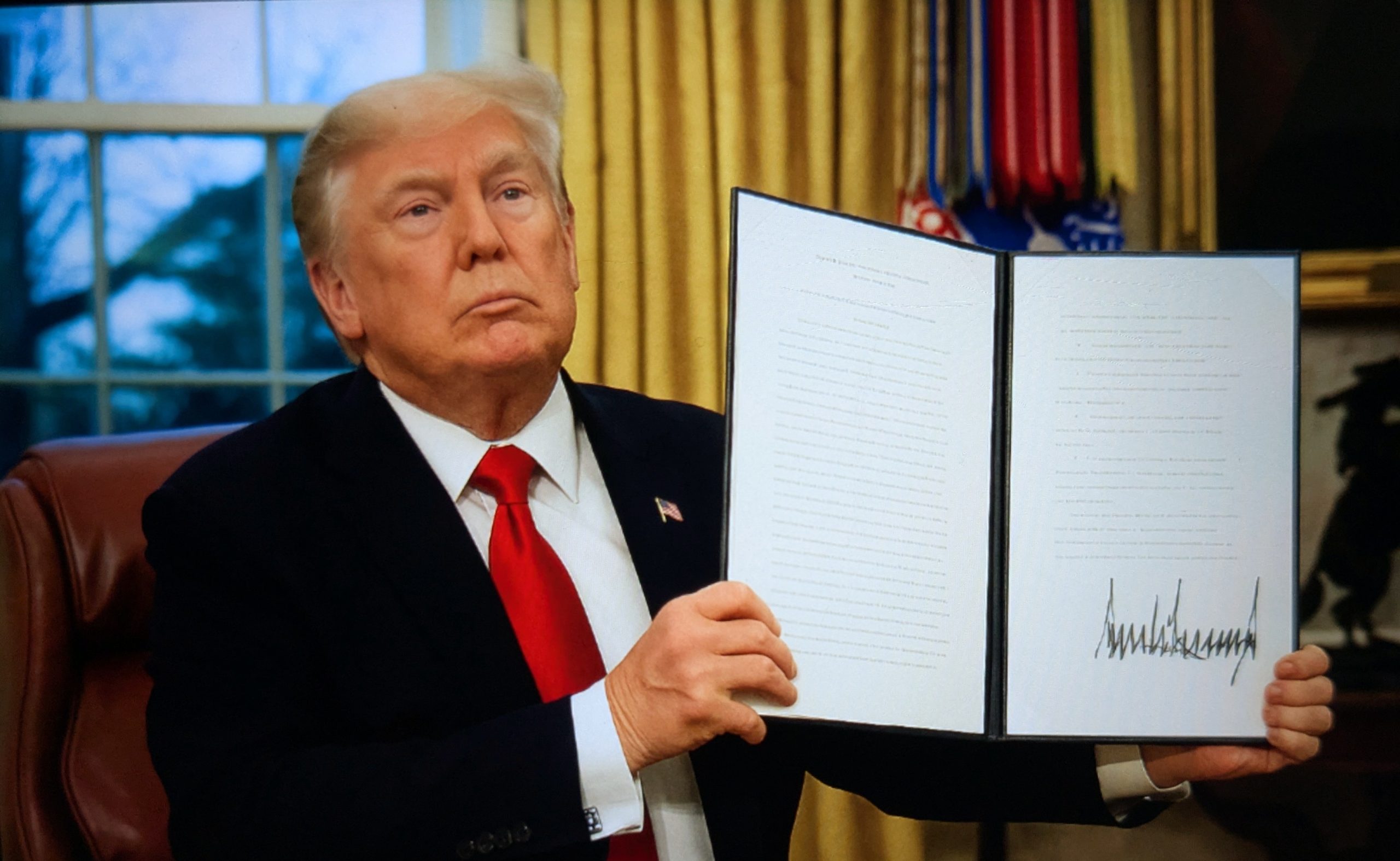
Administrative discourse underwent a significant fissure in early February 2026, following the dissemination of an electronically manipulated visual from the President Trump’s social media account. The content, which superposed the likenesses of former President Barack Obama and First Lady Michelle Obama onto primate figures, catalyzed an immediate bipartisan outcry.
While legislative allies and opposition leaders alike denounced the transmission as a departure from traditional presidential conduct, the former First Couple maintained a public posture of silence, instead prioritizing national encouragement for American athletes at the 2026 Winter Olympics in Italy.
Legislative Censure and Executive Deflection
The digital broadcast, appearing on the evening of February 5, 2026, provoked swift condemnation across the ideological spectrum. Senator Tim Scott, a prominent Republican from South Carolina and chair of the National Republican Senatorial Committee, characterized the imagery as “the most racist thing” emerging from the current administration, urging its immediate extraction. Other Republican personalities, including Senators Roger Wicker and Pete Ricketts, described the visual as “totally unacceptable” and “appalling.” Despite these rebukes, the President declined to issue a formal apology, contending that he had only scrutinized the initial segment of the video—which concerned allegations of 2020 electoral malfeasance—before authorizing his subordinates to facilitate the post.
The White House press office initially minimized the controversy, categorizing the footage as a benign “internet meme” referencing animated cinematic images. However, as political pressure mounted, the administration retracted the media on February 6, attributing the publication to an erroneous action by a junior staffer. This admission of a procedural lapse coincided with the President’s public assertion to reporters aboard Air Force One that he “didn’t make a mistake,” though he later clarified his denial of the specific racist elements embedded within the clip’s final seconds.
The Contrast of Silence and National Solidarity
In a notable departure from the current executive’s confrontational dialectal style, former President Barack Obama and Michelle Obama refrained from directly addressing the provocation. Instead, on February 6, they utilized their digital platforms to celebrate the talent and perseverance of Team USA. Their shared message, which emphasized national pride and communal cheering, was viewed by over 41 million citizens within 24 hours. Observers, including the NAACP, noted that this response aligned with their established “high road” strategy, a rhetorical framework prioritizing institutional dignity over personal grievance.
Civil rights organizations characterized the President’s rhetoric as a tactical diversion from contemporary socioeconomic challenges and ongoing federal inquiries into the Jeffrey Epstein case files. Advocates highlighted that while the current administration navigates a complex legislative landscape, the former president’s choice to ignore personal hatred serves as a modern benchmark for political composure. This juxtaposition has intensified the national dialogue regarding the necessity of structural oversight for executive communications to prevent the further erosion of civil discourse.
The Imperative of Behavioral Accountability
From a democratic standpoint, the preservation of the presidency’s moral authority necessitates a standard of conduct that transcends personal animosity. A healthy republic relies on the principle that its leaders represent the collective dignity of the citizenry; therefore, the utilization of dehumanizing tropes undermines the foundational values of equality and respect. The contrast provided by former President Obama’s silent focus on national unity underscores that true leadership is defined by the capacity to prioritize the common good over individual friction.
To ensure the stability of democratic institutions, it remains vital that executive rhetoric is held to a standard of transparency and decorum, fostering a political climate where substance and service are valued above inflammatory provocation.